Bill K sound
Home Contents 9.5 16 Multi-gauge 17.5 28 Pix Miscellany
JOINVILLE SOUND CONVERSION
By BILL KILGOUR
I mentioned a while ago (August 2013) that I had a couple of Silent Paxes and speculated idly about conversion to sound. Bill Kilgour has completely overtaken me and done it already. Here is his report, with my comments in square brackets.
I acquired a silent Joinville 9.5 projector through eBay France and was surprised to discover it was the top half of the Joinville 9.5 sound projector mechanism, complete with switching contacts for 24/16fps. Plus a side flap [in the back gate] that moved across to mask an optical soundtrack. [Unlike mine, Bills machine seems to have had the hole for the sound drum as well.] This confirmed my suspicions that the Joinville 9.5 sound projector was really a silent version fitted on top of a amplifier, just like the 9.5mm Gem /Son relationship. Which probably explains the strange chute design because the optical scanning point is a long way from the picture head. [This is a point I had not previously considered. It implies that a conversion to remove the chute is going to have problems getting sufficient smoothing in the space available unless one moves the sound drum back towards the gate, as Bill has done.]
"I had in my collection a 16mm Bell & Howell TQ2 with the usual cracked worm and decided to use parts from this redundant machine for the Joinville. One transformer supplied all the circuit voltages, which was a big bonus.


MOTOR DRIVE
"First job was to remove the old Joinville motor/fan/speed control. The smaller Bell & Howell servo motor was fitted in a new position at the the top of the projector, as the old motor position was where I wanted to fit the B&H soundhead. The steel vee pulley was turned down to the more superior flat drive; fortunately, being French it was made of steel and not Mazac. I had to braze a metal disc onto the pulley to give it a bit more depth for skimming down in my Myford lathe. A flat rubber belt from a TQ1 was used, as its a smaller diameter than the TQ2. [Bill says the flat belt is more flexible and provides greater contact area than vee or round. The B&H motor is DC and relatively low voltage; the precise size of the motor/drive pulleys doesnt matter as there is a wide range of speed adjustment for the motor).]
AMPLIFIER BASE
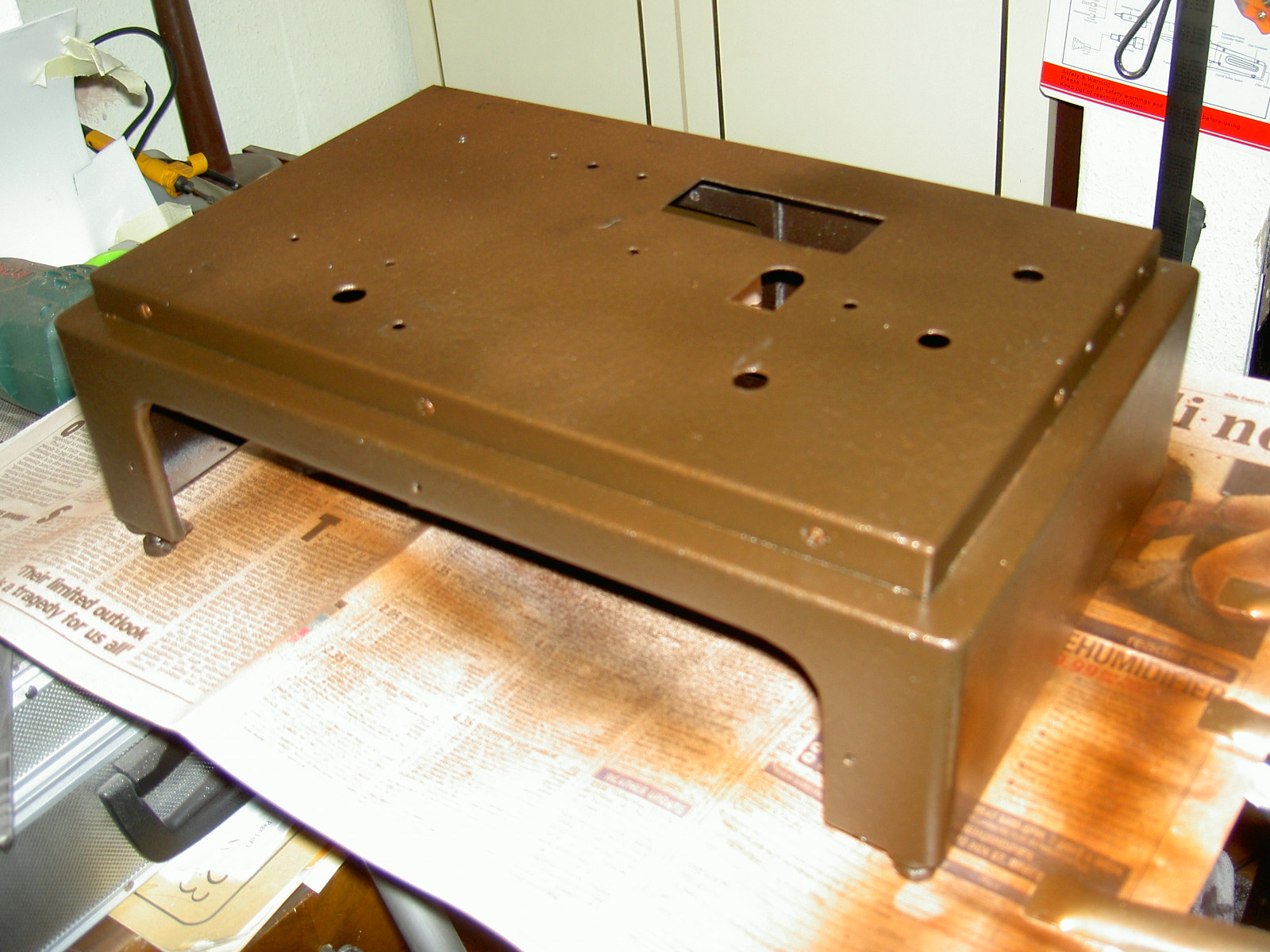
"The amplifier base was constructed from the metal side panel of a washing machine and incorporated the original silent base as a top for the new amp box. Any excuse for me to use the Mig welder. Had to cut out a slot in this to clear the fly wheel and also the old motor frame, came rather close to the shutter, phew!
SOUND HEAD


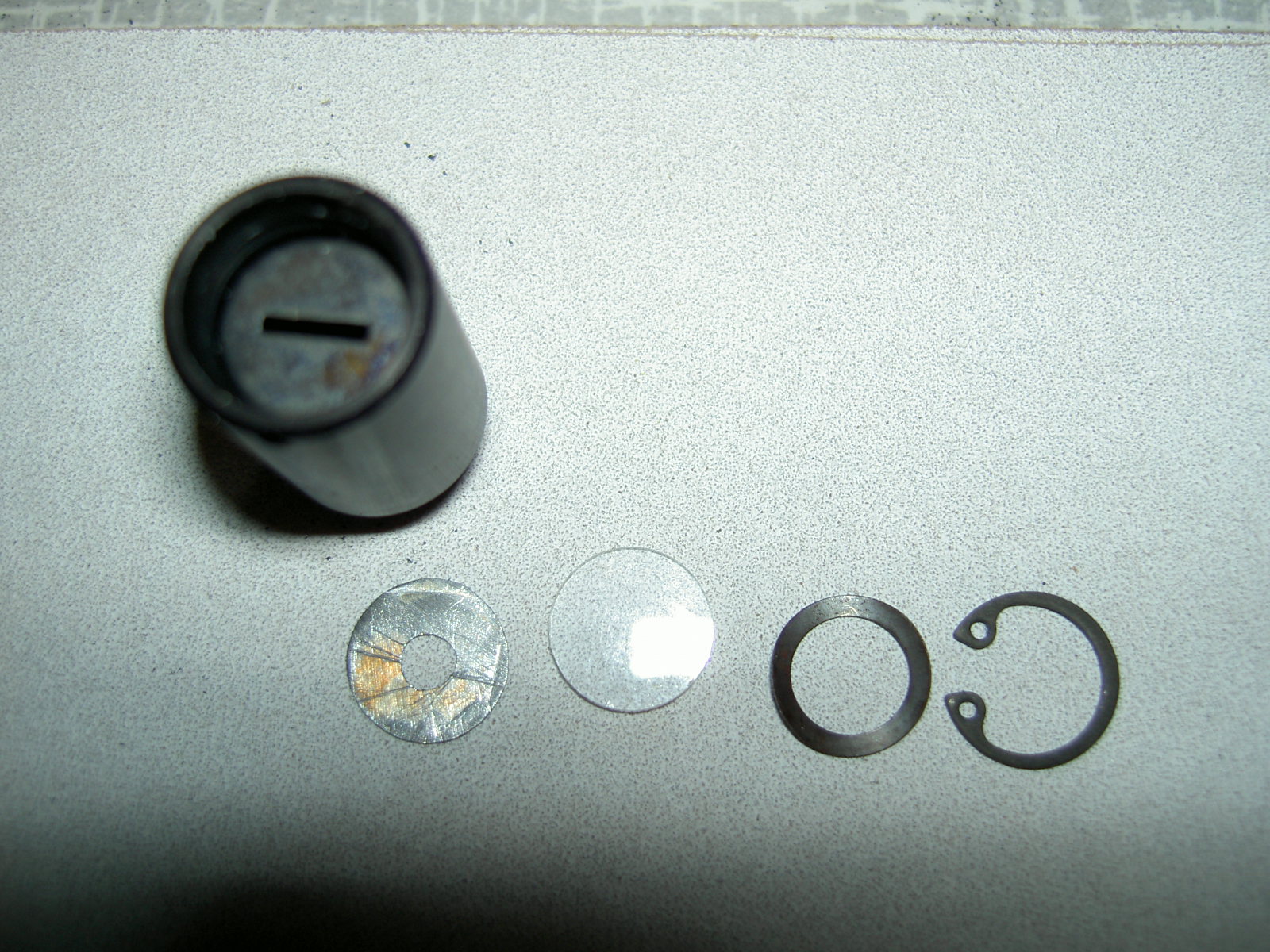
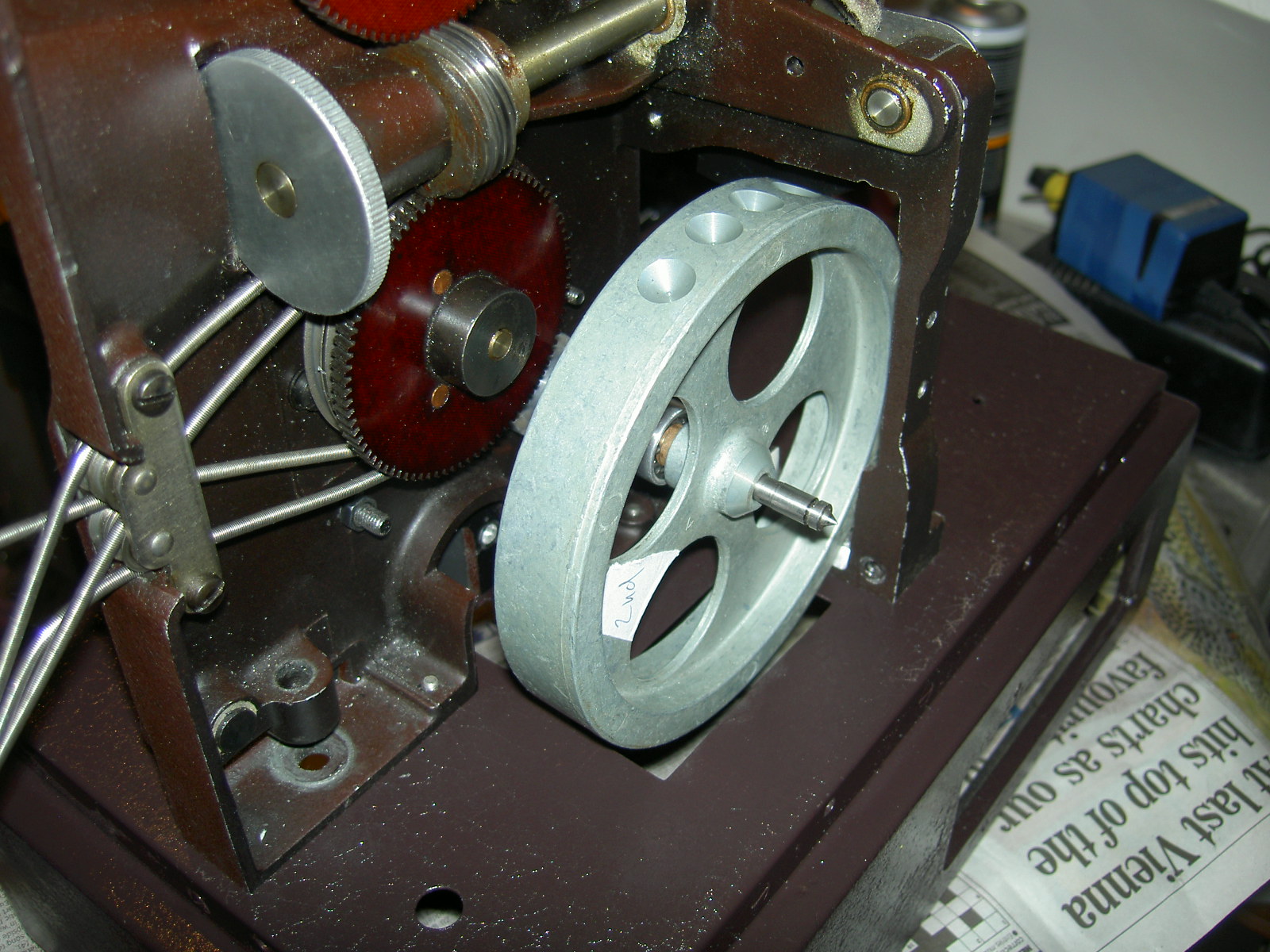


"By using the B&H sound head, everything was already in place including alignment of the optical slit and exciter lamp. [Bill has opted to achieve the necessary sideways movement of the film soundtrack by shifting the sound drum back rather than moving the exciter/sound optic assembly.] The 16mm sound drum was skimmed down to 9.5 less optical track and reversed on the shaft. The shoulder of the casting needed filing back to allow the drum to sit further in. A reducer washer was placed in front of the slit to bring it down to 9.5 scanning width. A small alloy bracket was made to hold the new cell/diode as close to the film as possible. The cell fed into a small circuit, which I assumed was some sort of signal equalizer (if its good enough for B&H its good enough for me.) A pinch roller arrangement was pinched from a old scrap Ampro. A large hole had to be cut in the main body of the Joinville for the new flywheel shaft. This went against all my old cine preservation instincts, but once you have jumped off the cliff there is no going back; I will probably be excommunicated from Group 9.5 for this act of vandalism.
LAMP

"The 24v 250w EMM lamp from the B&H fitted in as though it was made for it, though to get the best light output it needs a modern lens plus a 2 blade shutter. The donor Bell & Howell came with an electrical cooling fan which fitted exactly into the space vacated by the old Joinville fan/speed contacts. This electric fan gives the same cooling at both speeds, and takes the drag off the main motor.
AMPLIFIER / PRE-AMP


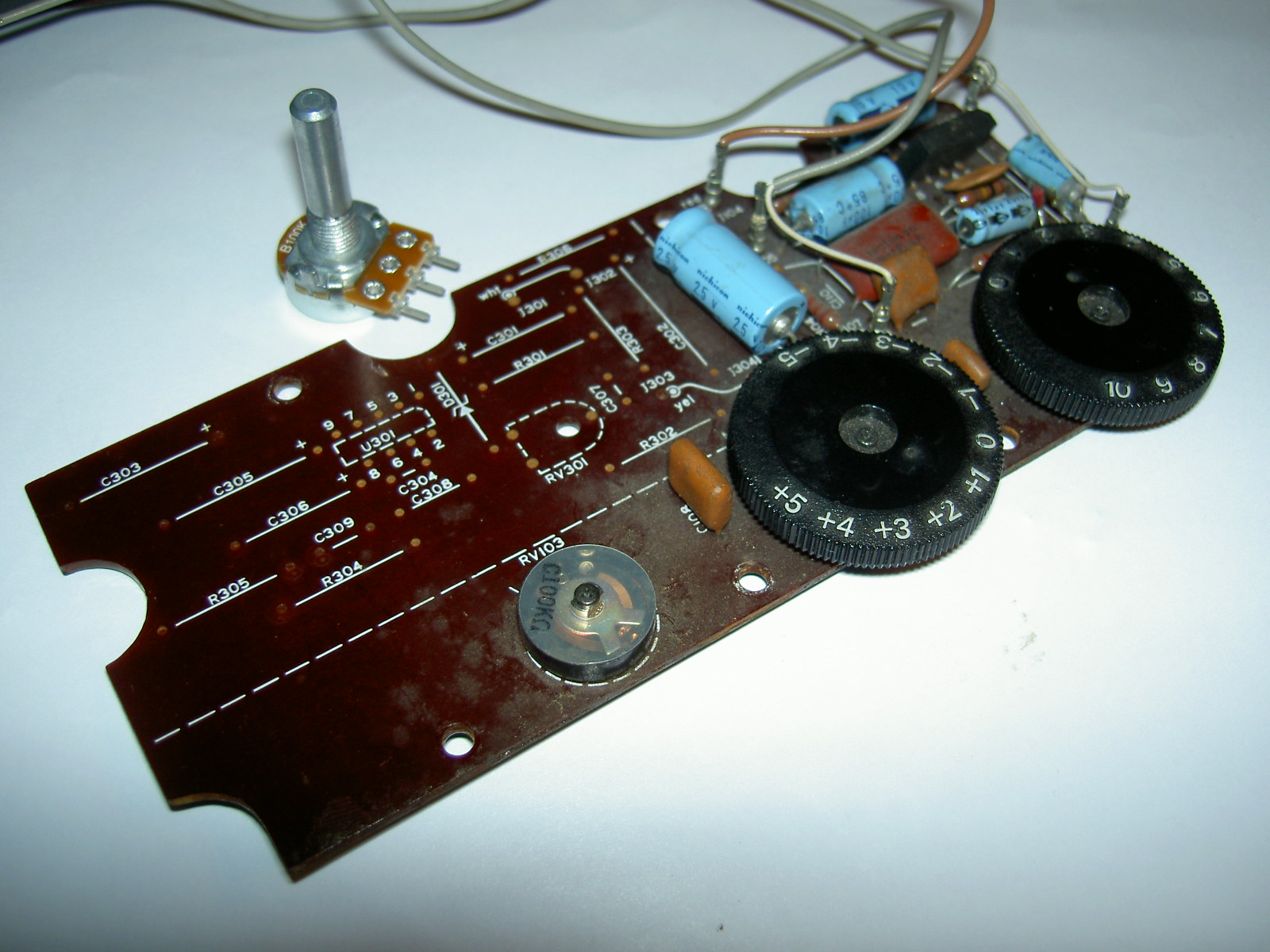

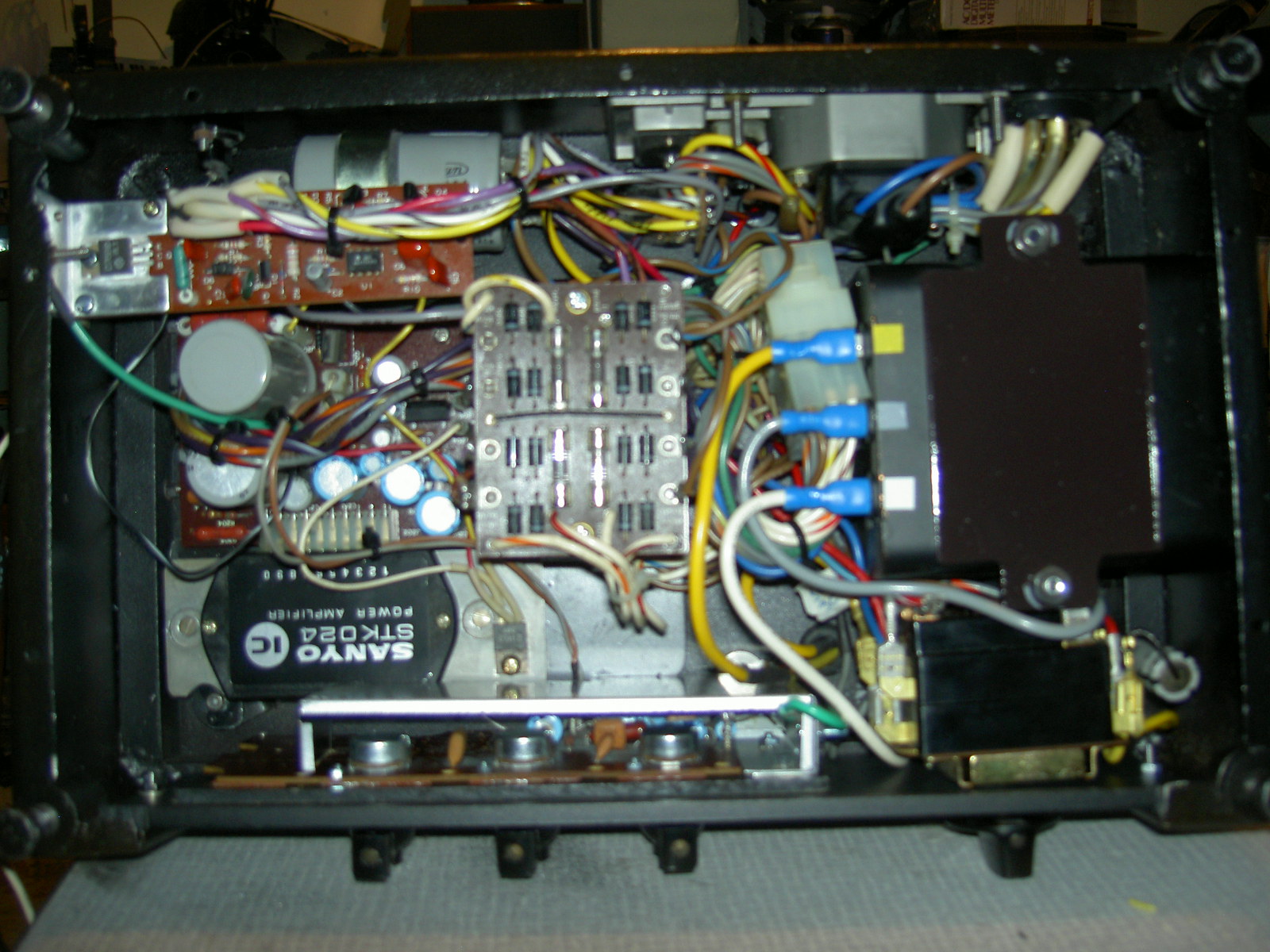
"All the gubbinsof the Bell & Howell were laid out on the bench and then transferred across to the Joinville. The small Sanyo amp was placed to the front of the machine away from the transformer. The fuse board was bolted to a bracket in the centre for easy access. The pre-amp with new potentiometers was secured behind the control panel. It would have been nice to have used the original vintage toggle switches but working out the wiring was beyond my feeble brain. So the B&H rotary switch was carried across with all the other gubbins. The switch fitted in at the corner of the amp box. In the long run it turned out best. I now have forward /reverse and lamp economy /full power settings.
SPOOL ARMS
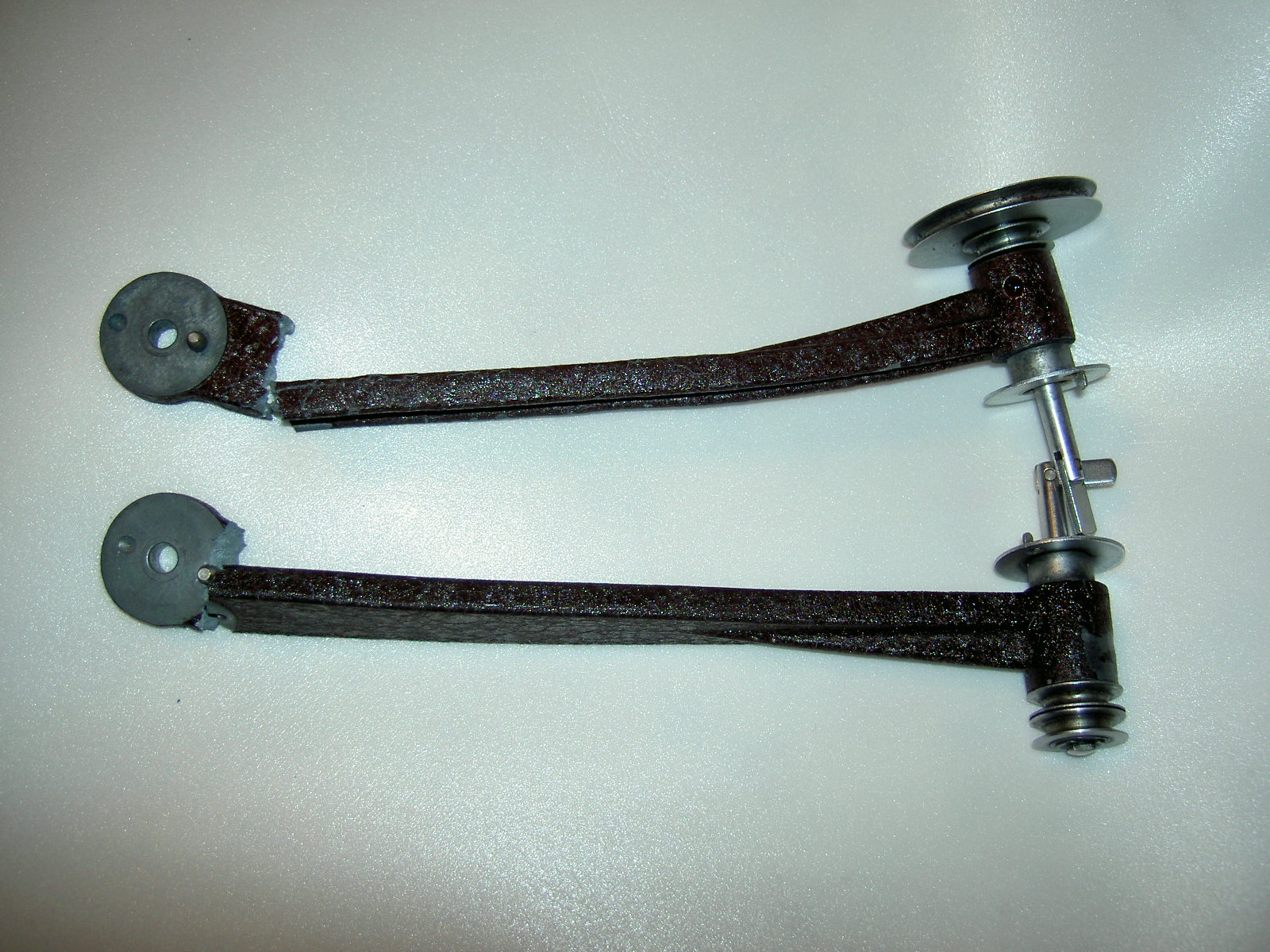

"The spool arms were cast in mazac and fell apart as I handled them. The only way to get measurements to make new arms was to super glue the bits together. 1 ins x 1/8 ins metal strip purchased from B&Q was ideal for the replacement arms. [Bill fails to mention what a major job this was. A strengthening rib had to be welded to each arm, likewise the spool spindle bearings and the round, flat ends that fit to the projector. Then all smoothed down with an angle grinder.]
PAINT COLOUR
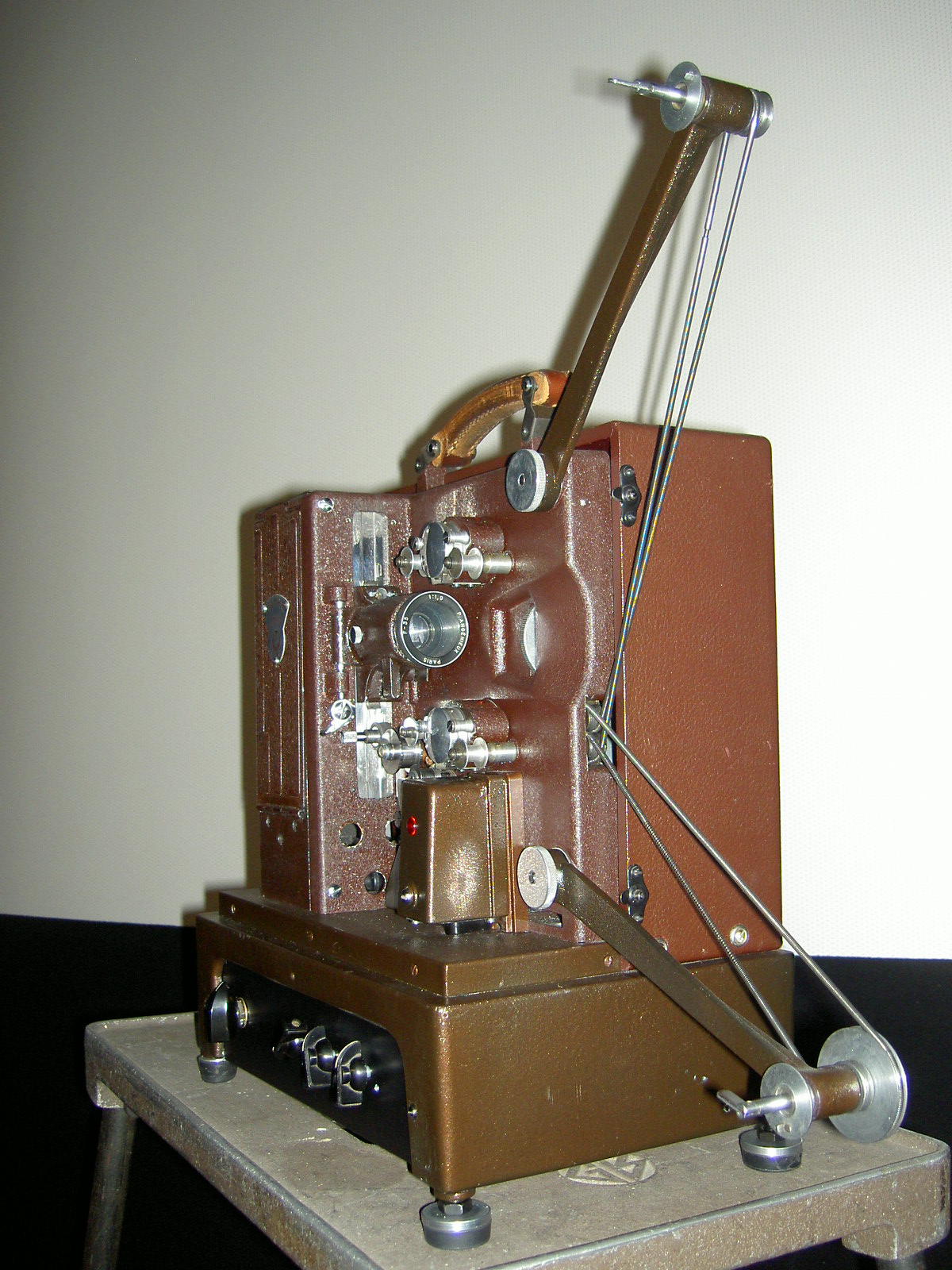
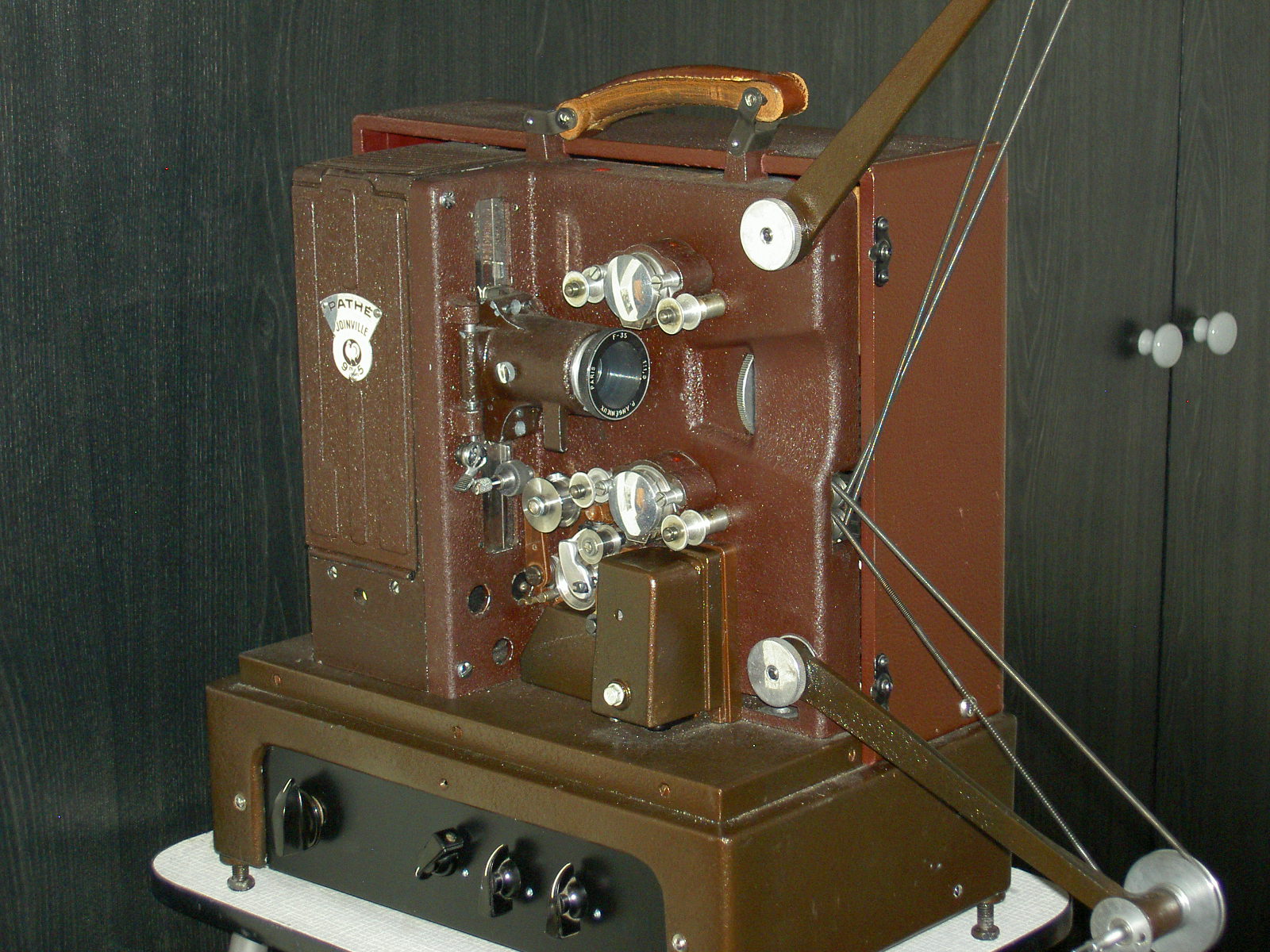
"Fortunately the original wrinkle finish on the main projector body was in good condition. Only the new amp base needed spraying. I used Halfords black wrinkle finish (you can't get Joinville brown) and lightly over sprayed with Ford Roman Bronze metallic. Colour match is not perfect, sort of near enough; luckily, projectors are used in darkened rooms.
"The Joinville runs very smoothly with most of most noise coming from the electric fan. It is nice to use thanks to B & H and the picture with sound is probably as good as I can get from a 9.5 optical track. Certainly no wow with the monster flywheel. Will go in reverse as well though I don't need it. [Interesting that Bill detects no wow; there has long been an argument over whether the wow on 9.5 sound tracks was due to projectors or was printed in.]
THINGS TO DO
"Fit a small fan on the end of the servo motor shaft. It gets rather warm, in the B&H projector this motor is in line with the fan housing and gets cooling from the air drawn through. Fill in the three redundant holes from toggle switches."
Bill Kilgour 2013
Home Contents 9.5 16 Multi-gauge 17.5 28 Pix Miscellany